
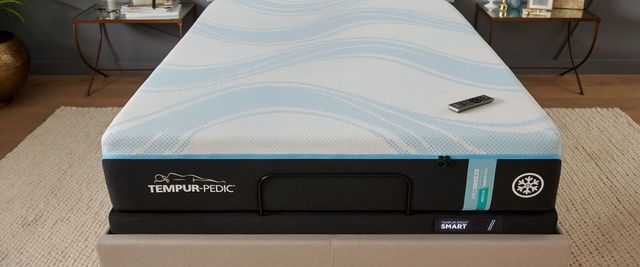
Tossing and turning at three in the morning because your shoulder feels jammed into a stiff mattress is no way to start your workday. Maybe you wake up with a nagging ache in your lower back, or your partner's midnight movements bounce you awake every time they roll over. Shopping for a memory foam mattress can feel overwhelming when every brand promises cloud-like comfort while critics warn about trapped body heat and sinking edges. You simply want a bed that cushions your joints, keeps your spine straight, and stays cool through the night.
Thankfully, our sleep specialists at BlvdHome have already tested the foam layers, compared the cooling covers, and narrowed down the most supportive beds on the market. In this guide, we will walk you through how viscoelastic foam works inside the layers, the honest pros and cons of owning an all-foam bed, how memory foam compares to innerspring and hybrid builds, and three standout mattresses you can try in our showrooms today.
Sleep Better Tonight With a Memory Foam Mattress
Test our collection of pressure-relieving mattresses in person at one of our five BlvdHome showrooms across Utah and Nevada or browse our full selection online today.
Key Takeaways
- Pressure-Relieving Material Science: Viscoelastic polyurethane foam reacts to your body heat and weight to soften underneath heavy joints, distributing pressure evenly across your shoulders and hips.
- Density Determines Lifespan: High-density comfort foam rated at 4.0 to 5.0+ pounds per cubic foot (PCF) resists sagging for 8 to 10 years, while low-density sub-3.0 PCF foam breaks down within 3 to 4 years.
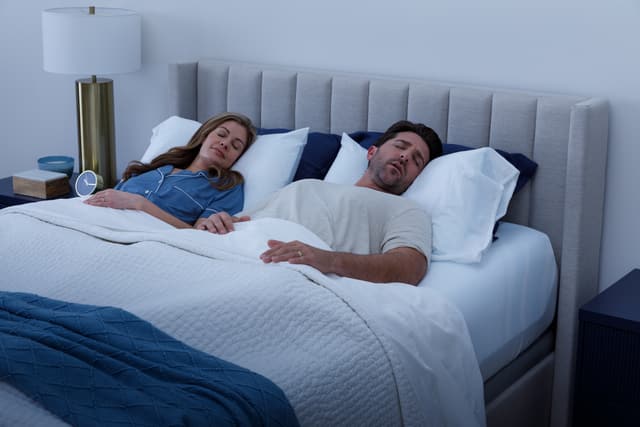
- Zero Partner Disturbance: Because viscoelastic cells absorb energy locally rather than transferring bounce across steel springs, an all-foam bed stops midnight tossing from waking your partner.
- Cooling Upgrades Solve Heat Retention: Modern open-cell foam structures, phase-change fabrics, and cooling gel memory foam technology draw excess body warmth away from the sleeping surface.
How a Memory Foam Mattress Works Inside the Layers
Understanding how a memory foam mattress supports your body starts with the material science inside the bed. Originally engineered by NASA in the 1960s to absorb high G-force pressure in aircraft seats, viscoelastic polyurethane foam combines viscosity—meaning it moves slowly under pressure—with elasticity, meaning it springs back to its original flat shape once you get out of bed. When you lie down, your body warmth softens the foam right beneath your shoulders and hips while firmer unheated foam around your waist stays upright to support the curve of your lower spine.
Core Layers of an All-Foam Bed
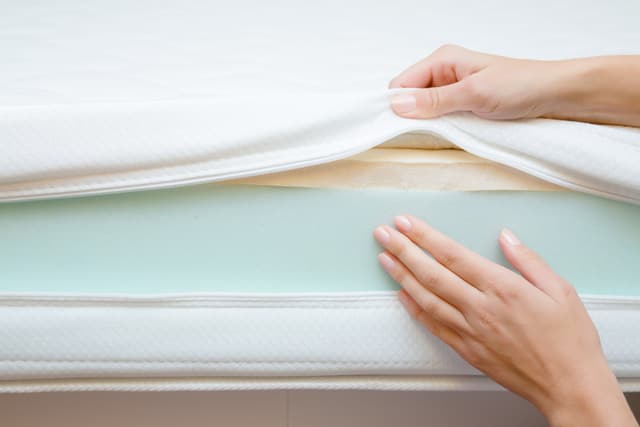
Rather than relying on a single slab of sponge-like material, a showroom-quality bed stacks four specialized layers that work together from top to bottom:
- Breathable Quilted or Knit Cover: The top fabric layer uses moisture-wicking fibers or cool-to-the-touch phase-change yarn to pull heat away from your skin the moment you lie down.
- Viscoelastic Comfort Layer: Sitting right beneath the cover, this 2-to-4-inch cradling layer molds to your curves to stop sore pressure points in your rotator cuffs, hips, and knees.
- Responsive Transition Layer: A firmer middle layer of polyfoam sits between the soft top foam and the base, keeping heavier hips from sinking straight through to the bottom of the bed.
- High-Density Polyfoam Support Core: Measuring 5 to 8 inches thick at the bottom of the mattress, this dense foundation gives the bed its structural stability, edge support, and flat spine alignment.
Memory Foam Mattress Pros and Cons
Weighing memory foam mattress pros and cons helps you decide whether the deep, body-hugging contour of an all-foam design matches your sleep position and bedroom temperature habits.
Pros
Unmatched Joint and Pressure Relief
Viscoelastic foam molds around sharp bony points, making it the best mattress for side sleepers and pressure relief across sore hips and aching shoulders.
Superior Motion Isolation for Couples
Energy-absorbing foam cells deaden movement right where it happens, creating a true motion isolation mattress for couples who wake up at different hours or share the bed with pets.
Natural Lower-Back Alignment
Filling the hollow gap beneath your lumbar spine makes a medium-firm memory foam mattress for lower back pain a top recommendation for stomach and back sleepers alike.
Effortless Adjustable Base Flexibility
Unlike rigid border-rod coil beds, adjustable base compatible memory foam beds bend smoothly at the head and knees without creaking or warping the internal support core.
Hypoallergenic Dust Mite Resistance
Dense cellular foam leaves no hollow cavities inside the mattress core where dust mites, pet dander, and household allergens can collect over time.
Cons
Potential Heat Retention in Basic Models
Traditional closed-cell viscoelastic foam can trap body warmth if you do not step up to open-cell airflow channels or cooling gel infusions.
Slower Surface Bounce and Edge Sinkage
Because foam responds slowly to weight shifts, heavy sleepers may notice more compression when sitting on the side edge of the bed to tie their shoes.
Memory Foam vs. Innerspring vs. Hybrid Mattresses
Comparing a memory foam vs innerspring vs hybrid mattress comes down to whether you prefer sleeping "in" your bed or sleeping "on" your bed. An all-foam mattress lets you sink gently into the surface so the foam wraps around your body, while a traditional innerspring mattress uses interconnected steel coils to push back with a buoyant, springy lift right on top of the surface. A modern hybrid bridges the gap by pairing a 2-to-3-inch viscoelastic comfort top with a base of individually pocketed steel coils.
Feel, Responsiveness, and Weight Considerations
Some shoppers ask “why do I feel stuck in memory foam” when testing ultra-plush models for the first time. Because viscoelastic material takes a few seconds to recover after you shift your weight, switching from your back to your side takes slightly more effort than it does on bouncy steel springs. Body weight also changes how deep you sink into the comfort layers:
- Petite and Average Sleepers (Under 230 Pounds): All-foam mattresses in soft-to-medium firmness levels contour smoothly without letting your hips drop out of alignment.
- Plus-Size Sleepers (Over 230 to 250 Pounds): Heavier bodies compress top comfort layers deeper, so sleepers over 230 pounds should choose either a high-density 5.0+ PCF firm memory foam build or a pocketed-coil hybrid that adds steel pushback beneath the waist.
- Hot Sleepers in Warm Climates: While traditional closed-cell foam restricts airflow, hybrids allow air to circulate between the steel coils, and premium all-foam beds like Tempur-Pedic's Breeze lineup use ventilated foam and phase-change materials to pull heat away.
When to Choose Pure Memory Foam vs. Hybrid
Choosing between pure viscoelastic foam and a coil hybrid is easy once you rank your top bedroom priority. When setting up a new memory foam mattress on a slatted platform bed or wooden bed frame, always verify that the wooden slats sit no more than 2.75 to 3 inches apart so the heavy high-density foam base cannot bulge downward between the gaps and void your manufacturer warranty.
- Choose Pure Memory Foam If: You sleep on your side with tender shoulders, share the bed with a restless partner who tosses all night, or use an electric adjustable bed base every evening.
- Choose a Memory Foam Hybrid If: You change positions frequently throughout the night, weigh over 230 pounds, sit on the perimeter edge of the bed often, or want the familiar bounce of pocketed coils paired with a pressure-relieving foam top.
Comparing Memory Foam, Hybrid, and Innerspring Mattresses Side by Side
Reviewing each construction style across contouring, cooling, bounce, and longevity makes it simple to spot which mattress architecture fits your sleep habits best.
| Mattress Type | Pressure Relief & Contouring | Motion Isolation Rating | Temperature Regulation & Airflow | Edge Support & Bounce | Average Lifespan | Best Sleeper Position & Body Type |
|---|---|---|---|---|---|---|
| Traditional Memory Foam | Deep body-hugging contour that cradles sharp joints. | Exceptional isolation with almost zero motion transfer. | Retains moderate warmth without cooling upgrades. | Low bounce with moderate compression along the perimeter. | 8 to 10+ years (with 4.0+ PCF foam). | Side sleepers, back-pain sufferers, and light-sleeping couples. |
| Gel / Open-Cell Cooling Memory Foam | Deep adaptive cradling with faster surface recovery. | Exceptional isolation that absorbs partner movement. | High cooling performance via ventilated cells and phase-change covers. | Low-to-moderate bounce with dense foam edge stability. | 8 to 12 years. | Hot sleepers, side sleepers, and adjustable base owners. |
| Memory Foam Hybrid | Balanced surface contouring paired with underlying coil lift. | Very good isolation thanks to pocketed coil sleeves. | Excellent airflow circulating through the open coil core. | Strong reinforced perimeter edges and responsive bounce. | 7 to 10 years. | Combination sleepers, couples, and sleepers over 230 pounds. |
| Traditional Innerspring | Minimal surface contouring with firm flat pushback. | Fair isolation as interconnected coils transfer movement. | High natural airflow through open steel spring rows. | Very high bounce with firm border-rod edge support. | 5 to 7 years. | Stomach sleepers, back sleepers, and budget guest bedrooms. |
Top Memory Foam Mattresses to Upgrade Your Sleep
Testing authentic memory foam mattresses side by side lets you feel how different foam formulas and cooling covers respond to your body weight. Here are three standout Tempur-Pedic mattresses you can experience right now at BlvdHome.
Tempur-Pedic TEMPUR-Adapt 11" TEMPUR-Material Medium Smooth Top Queen Mattress

Shop the Tempur-Pedic Mattress
Built for sleepers who want balanced spinal alignment without sinking too deeply, the 11-inch TEMPUR-Adapt Medium Queen mattress pairs legendary pressure relief with a cool-to-the-touch knit cover. Inside, an upper comfort layer of plush TEMPUR-ES material cushions your shoulders and hips immediately upon contact, while a deeper Original TEMPUR support layer adapts to your exact weight and body temperature throughout the night. This all-foam medium build stops partner motion transfer dead in its tracks and flexes effortlessly on any power adjustable bed base.
Top Features
- Cool-to-the-Touch Knit Cover: Woven with high-molecular-weight yarn that pulls excess warmth away from your body as you lie down.
- TEMPUR-ES Comfort Layer: Offers a softer initial feel that works in tandem with underlying support foam to cradle sore joints.
- Original TEMPUR Support Layer: Continuously adapts to your unique shape and weight to keep your spine aligned in any sleep position.
- Adjustable Base Compatible: Bends smoothly with motorized head and foot elevations without creasing or losing structural support.
Tempur-Pedic TEMPUR-LuxeAdapt 13" TEMPUR-Material Soft Smooth Top Queen Mattress

Shop the Tempur-Pedic Mattress
Designed for side sleepers and anyone craving deep, enveloping pressure relief, the 13-inch TEMPUR-LuxeAdapt Soft Queen mattress delivers Tempur-Pedic's most advanced conforming support. Beneath its ultra-stretch SmartClimate Dual Cover system—which zips right off for machine washing—sits the breakthrough TEMPUR-APR+ support layer. This ultra-dense cell structure relieves up to 20 percent more pressure than standard foam formulas, eliminating sharp tension points in your rotator cuffs, lower back, and hips while isolating 100 percent of partner tossing and turning.
Top Features
- TEMPUR-APR+ Support Layer: Engineered with an ultra-conforming cellular structure that delivers maximum pressure point relief for side and back sleepers.
- SmartClimate Dual Cover System: Features a zip-off, machine-washable outer layer with cool-to-the-touch fibers for fresh, hygienic sleep.
- 13-Inch Plush-Yet-Supportive Profile: Combines a soft TEMPUR-ES surface comfort layer with deep ergonomic lumbar support underneath.
- Zero Motion Transfer Architecture: Absorbs every movement locally so restless partners never disturb your deep sleep cycles.
Tempur-Pedic TEMPUR-LuxeBreeze 13" TEMPUR-Material Soft Smooth Top Split King Mattress

Shop the Tempur-Pedic Mattress
If you love the body-contouring hug of viscoelastic foam but always wake up kicking off the blankets, the 13-inch TEMPUR-LuxeBreeze Soft Split King mattress solves overheating from cover to core. Engineered with a 4-level PureCool+ phase-change system and ventilated TEMPUR-CM+ comfort layers, it feels up to 8 degrees cooler all night long by letting trapped heat and humidity flow out of the bed. Because this Split King configuration includes two independent pieces, couples can pair it with a split adjustable base to customize their head angles separately.
Top Features
- 4-Level Breeze Cooling System: Combines a SmartClimate cover with PureCool+ phase-change material to absorb heat during the first 20 minutes and all night long.
- Ventilated TEMPUR-CM+ Material: Uses an open-cell breathable structure that cycles warm air and humidity out of the mattress core.
- 2-Piece Split King Configuration: Lets two sleepers adjust their head and foot positions independently when paired with a split power base.
- Soft Pressure-Relieving Contour: Cradles sensitive shoulders and hips in a plush 13-inch profile without sacrificing lower-back stability.
Weighing the joint-cradling pressure relief and motion isolation of a memory foam mattress against foam density ratings and active cooling layers guarantees you bring home a bed that supports restorative sleep for years. Stop by one of our locations in St. George, Hurricane, and Cedar City, Utah, or Mesquite and Las Vegas, Nevada, to lie down and compare mattresses side by side, or browse our full collection online today. Backed by over 90 years of family-owned heritage and more than 160,000 sq. ft. of showroom space, our friendly, non-pressured sleep specialists are ready to help you compare foam densities, explore flexible financing options, check out clearance deals, and schedule reliable local delivery and bedroom setup that online bed-in-a-box brands simply cannot match.
Memory Foam Mattress FAQs
A high-quality memory foam mattress built with 4.0 to 5.0+ PCF foam density typically lasts between 8 and 12 years with nightly use. Rotating the mattress head-to-foot every six months and using a breathable waterproof mattress protector prevents premature body impressions and keeps the foam clean.
No, modern memory foam mattresses do not make you sleep hot when they include open-cell ventilation, cooling gel memory foam technology, or phase-change fabrics. Advanced models like the Tempur-Pedic TEMPUR-LuxeBreeze actively pull heat away from your body to sleep up to 8 degrees cooler than traditional closed-cell foam.
Yes, a memory foam mattress is ideal for side sleepers and lower back pain because viscoelastic foam cushions protruding shoulders and hips while supporting the natural curve of the lumbar spine. Medium and medium-soft profiles work best for side sleepers, while medium-firm builds prevent the pelvis from sinking too low for back sleepers.
No, you should not put a memory foam mattress on an old-fashioned flexible coil box spring because the heavy foam requires a solid, flat surface to prevent sagging. Instead, place your memory foam bed on a solid foundation, a platform bed with wooden slats spaced less than 3 inches apart, or a motorized adjustable base.
A new compressed memory foam mattress takes 24 to 72 hours to expand to its full thickness and air out any mild new-foam scent. Choosing a CertiPUR-US certified mattress guarantees that any initial off-gassing smell comes from harmless water-blown polyurethane rather than toxic volatile organic compounds.
You should look for a viscoelastic comfort layer density of at least 4.0 to 5.0 pounds per cubic foot (PCF) and a base support core of at least 1.8 PCF when buying a memory foam mattress. Higher PCF density ratings ensure the foam cells bounce back night after night without developing permanent body valleys after a few years.
Why Trust BlvdHome?
The roots of this family business began as early as the pioneer settlement of Southern Utah. One descendant of those 1861 pioneers was Lester Wittwer. In 1928, he started a trucking business with other family members, delivering homegrown fruits and vegetables to many outlying areas. The story of BlvdHome began in 1974 when Lester’s son Tony decided to venture off into the furniture world - with two full-time employees and a small showroom of only 8,000 square feet. Today, BlvdHome has 5 retail locations with over 160,000 sq. ft. of showroom space, located in St. George, Utah, Hurricane, Utah, Cedar City, Utah, Mesquite, Nevada, and a new Las Vegas location. With over 230 amazing team members, BlvdHome continues to deliver on a commitment to customer service that started over 90 years ago.
Shop Mattresses at BlvdHome
At BlvdHome, we provide quality name-brand appliances, furniture, and mattresses for great prices. Shop online or visit us today at one of our locations in Utah or Nevada. In the meantime, browse our website to shop BlvdHome Bargain Barn and check out our flooring selections to increase your home value. More available than ever, our experts at BlvdHome are always happy to help you find what you’re looking for, whether you call us or use our online chat feature. Contact us today!
→ Learn More: A Retailer's Guide to the Best Brand of Mattresses for Every Budget